About Me

My photo
Author of three books set in Africa: Safari Jema, My Life with Ndoto, and The Dancing Bridge of Kamunjoma. I write about travel and adventure from my home in California and from Africa. I've sailed a catamaran from California to Hawaii, trekked in the Himalayas, worked as a construction manager on a bridge project in Zambia, hiked 500 miles of the Camino de Santiago, cruised 6000 miles on The Great Loop, and traveled to more than100 countries and all seven continents. Indie Book Award Winner for Best Memoir of 2012, New York Book Festival Honorable Mention for Non-Fiction, San Francisco Book Festival Honorable Mention for Non-Fiction, Travelers Tales Solas Award for Best Travel Writing Honorable Mention for My Gambian Husband. Indie Book Award Finalist - Best Travel Book 2013. BOTYA Honorable Mention 2013 - Travel Essay. 2022 Indie Book Award Finalist for Dancing Bridge. Member of The Explorers Club since 2013 Thanks for reading!
Showing posts with label Africa. Show all posts

Tuesday, March 20, 2012

Sample chapter from Safari Jema, A Journey of Love and Adventure from Casablanca to Cape Town


Meat is Meat

Victoria Falls roared nearby while Scott watched a tourist leap
from the bridge between Zimbabwe and Zambia and disappear
into the abyss over the Zambezi River. He couldn’t bring himself to actually lean over the railing because he has a fear of heights. Just standing on the bridge was enough to make his knees buckle. While he waited for the next bungee jumper to vanish from sight, he became an instant trillionaire when he bought a stack of Zimbabwean one hundred billion dollar notes from a man on the bridge. A trillion Zimbabwe dollars didn’t buy much. Inflation had topped 500 million percent and a single one-hundred-billion dollar note would buy little more than a loaf of bread or a few eggs. But the billion-dollar notes had become a commodity. While President Mugabe continued to ruin an entire country, he had inadvertently created a market for Zimbabwe
dollars on eBay. Unfortunately many months later, in Thailand, our backpack was relieved of eight hundred billion dollars along with our beloved Swiss Army Knife. The knife wasn’t your run-of-the-mill gadget with a blade and screwdriver. It was one I had purchased direct from the source in Switzerland. It was called The Superchamp and it had dozens of tools incased within its only-available-in-Switzerland black body. Not
only that, engraved on its side was a personalized mushy dedication to Scott. More than a portable toolbox, its knife and corkscrew alone represented romantic picnics in the Alps and glasses of Riesling along the Rhine. Somehow I think I would have mourned the loss a little less if the Superchamp were being put to use building a bridge in Africa instead of opening a can of beans in some communal kitchen of a backpacker hostel in Thailand.

Billion dollar notes aside, it was tragic what was going on in Zimbabwe. People desperately waited for something to change. There were fuel shortages, grocery store shelves were empty, and farms sat derelict. Those who were able would cross the border into Zambia each day to work—or to sell stacks of Zimbabwe dollars to travelers— before returning at night to a ruined Zimbabwe. Most Zimbabweans seemed to accept their lot with something closer to pragmatism than bitterness. We asked a taxi driver waiting for fares near the bridge how he felt about what was happening in his country and if he thought Mugabe should step down or be thrown out. He answered with a resigned shrug, “It’s better to have the devil we know than one we don’t.”
It wasn’t always like that in Zimbabwe. Until recently it was our favorite African nation. It is a physically beautiful country and we had always admired the resourcefulness of her people. As recently as 1999, Zimbabwe was still considered a breadbasket of Africa, the economy was relatively healthy, and inflation was not yet a major headline. On two previous visits we had been able to travel anywhere in the country in relative comfort and security.

During one such trip we noticed a billboard advertising “Business Days, Zimbabwe Trade Zone,” from our seats on a crowded long-distance bus. As we entered the colonial city of Bulawayo, we decided it might be interesting to see how a trade show in Zimbabwe might differ from one in Silicon Valley and we made a plan to attend. I am sure we were the only tourists there. When we arrived at the entrance they couldn’t decide under what category to admit us. Finally someone handed us badges that read, “Foreign Guest,” and we entered the trade show floor. Salesmen hawked furniture, crafts, and import-export opportunities from within hundreds of tents and booths. In lesser number were agents representing safari and game lodges. One lodge, located in Hwange National Park, offered trade show attendees a full board package including game drives at a place called Ganda Lodge for a price almost too good to believe. Scott gave me a look that said, “What have we got to lose?” We purchased two nights and received an official-looking voucher.

The next day we took another bus to Hwange National Park where we met Happiness, Cuthbert, Fortunate, and Boniface, all part of the Ganda Lodge staff. I wondered who they thought we were because we received the royal treatment. Soon we learned we were the first guests they had had in weeks and that we would have Ganda Lodge to ourselves. After a welcome drink of something orange and cool, we were shown a selection of two-story cottages to pick from. We quickly chose one fronting both the water hole and the swimming pool. This in turn overlooked a grassy savannah shaded by acacia and mahogany trees. In a branch of a thorn tree overhanging a second-story viewing platform, a lilac-breasted roller came to rest not two feet from where we sat. The spectacularly colored bird preened its feathers like an actress preparing for a close-up. It was
the dry season at Hwange and most of the water in the holes had evaporated. Fortunately there was still water in the pond near our cottage and that was what brought thirsty animals practically to our front door.
After we settled in, the head ranger David took us on a game drive. We stopped briefly to watch zebra and giraffe grazing near the lodge, and then headed out into the bush. One hour into the game drive we stopped near a herd of some two hundred elephants. One juvenile elephant immediately performed an impressive mock charge, running at our vehicle with his ears flared out and his little trunk flailing wildly. Then while I held my breath, another young female elephant walked directly over to where I sat in the backseat of our open-topped Land Cruiser and calmly draped her trunk over my shoulder. My heart was beating so hard I thought it would leap from my chest. I sat like a statue even though my insides tingled with excitement. There was nothing I could do to stop the happy tears that ran down my cheeks.
After a few minutes of close-encounter bliss, we continued through the game park stopping again to watch a group of slow-moving impala and giraffe. The air was so hot and parched that the grasses crackled under the hooves of the animals. I felt nearly on the verge of heatstroke.I’ve never been one to handle the heat well anyway, and the temperature out on the savannah was pushing me to my limit. Evidently it showed
because David glanced at my clammy, flushed face and asked, “Would you like to go back now?” As much as I wanted to have another close encounter with an elephant, I knew that driving around in one-hundred-
degree heat in an open-top vehicle might do me in. Reluctantly I nodded at David and said, “Yes, please.”

Back at the lodge we changed into swimsuits and chilled down in the icy cold pool. As we hung on to the pool’s edge feeling our body temperature return to normal, we watched zebra come to the water hole and drink. Boniface brought us cold beers. It was heaven. Though attending a trade show is not something most travelers usually do, it paid off big for us. The price for the all-inclusive stay at Ganda Lodge was only fourteen dollars per person, per night. Total. For everything. At lunch a tall and dapper African named Cuthbert whose every move conveyed style and grace served us a plentiful meal and more cold drinks on a covered terrace. Watching Cuthbert move around the terrace, I couldn’t help but be reminded of the elegant giraffe we had encountered during our game drive that morning. When we finished eating, he cleared the table so effortlessly that it was as if he had just waved his hand over it and made the dishes disappear. He smiled at us more like we were guests in his home than visitors to a game lodge. “Which meat would like to have for dinner?” he asked.
“You mean we get to pick?” I asked. “What are our choices?”
“Chicken, or beef, or pork,” replied Cuthbert.
“Well, chicken sounds good. We’ll have the chicken,” Scott answered for both of us. Cuthbert seemed a little disappointed at our choice.

After lunch David drove us back to a water hole located about forty minutes from the lodge. During our game drive we had noticed a ladder leading to an enclosed platform in a tall tree near the water and asked if we could spend the afternoon alone there. David parked the vehicle directly under the tree so that we could
safely and quickly climb to the platform. Before leaving, he handed us a small box of cold drinks and said, “Be careful, and try not to become overheated.” We climbed the ladder and spent the next three hours
well hidden in the leafy tree spying on elephant and antelope as they came to the water to drink.

Game viewing that afternoon was a vastly more rewarding experience because the animals were completely unaware of our presence. Perhaps they were under the influence of the heat as well, but I have never seen African animals so relaxed. Some even napped. Without half a dozen safari vehicles filled with excited tourists destroying the calmness of nature (“Marge! Did you see that? Look over there. No, over there! Oh, you missed it! He’s gone now.”), we were able to see antelope just being antelope. It was just Scott, the African bush, and me. Because it was so hot and dry at Hwange, animals naturally gravitated to the water hole so it bustled with activity. Some animals drank from the water’s edge then rested in shade nearby before returning for another drink. Adult elephants stood in the pool and cooled their bodies with showers of water from their trunks while baby elephants rolled in the mud or playfully charged one another. The one behavior all the animals had in common was that they seemed reluctant to leave.
So were we. When Happiness and Fortunate arrived to take us back to the lodge, it struck me that their names expressed our emotions of the day perfectly.

At 7:00 p.m, we were called to dinner . Again it was a buffet with copious amounts of food, way too much for just the two of us. And there was plenty of chicken. I said to Cuthbert, “There’s so much
food!” and he responded, “If you eat more, you worry less.” It didn’t take too long for us to realize that the staff of Ganda Lodge and their families would be eating what we couldn’t finish. We also understood
that when there are no guests at the lodge, there are no leftovers to eat. We took small but sufficient portions of food to our table and ate while the staff watched at a distance.
From the terrace we could see impala, warthog, and giraffe come to drink. Gesturing towards the animals at the water hole, I remarked to Cuthbert, “It’s so beautiful! It would be wonderful to have a meal closer to the water hole.”
From the comfort of our bed the next morning, we watched more than eight hundred buffalo cross the savannah before we headed to the terrace for breakfast. Cuthbert met us at the step and swept his arm
around until it pointed down to the water hole. There on the bank was a table for two beautifully set with white linen, china, and a small vase of wildflowers. “Today, you will eat breakfast at the water hole.”
I burst into tears. To this day it is the most spectacular place I have ever dined.
As we finished our eggs, Cuthbert came to our table and asked,
“Which meat would you like for lunch today?”
“Which meat do you recommend, Cuthbert?” Scott asked.
“Well,” he said slowly. “Meat is meat.” He shrugged as if it did not matter which meat was chosen. “But,” he added quickly, “I don’t think you care much for the chicken. I think you prefer the beef.”
Scott looked over at me and smiled. “I think we prefer the beef too,” he said to Cuthbert.
And that is what we all had for lunch that afternoon. There was enough beef on the luncheon buffet table to feed twenty.

After lunch Cuthbert again approached us with, “Which meat
would you like for dinner?”
We smiled at him and asked, “Do we still like the beef?”
Cuthbert smiled back. “Yes, I think you like the beef most of all.”
Two days later when we left Hwange, we stopped back in Bulawayo
and traded facemasks and snorkels (I honestly can’t remember why in
the world we had facemasks and snorkels with us) and a little money
for a graceful wooden giraffe. Almost six feet tall and hand carved by
the seller, I named him Cuthbert.

Monday, January 16, 2012

Safari Jema , A Journey of Love and Adventure From Casablanca to Cape Town

 Safari Jema, A Journey of Love and Adventure From Casablanca to Cape Town, is now available on Amazon.com. 

http://www.amazon.com/Safari-Jema-Journey-Adventure-Casablanca/dp/1463741790/ref=sr_1_1?s=books&ie=UTF8&qid=1326331315&sr=1-1

I wrote it for Scott. He loved it and encouraged me to share it with everyone who said, "You should write a book about this!" I hope you enjoy reading about our ten month overland adventure in Africa.

Thursday, July 28, 2011

Would You Want an Animal to Die for your Ornamentation?

http://www.youtube.com/watch?v=AElxLdGWF2U&feature=youtu.be

Watch this short video about ivory poaching then decide.

Monday, August 16, 2010

Avoiding Arrest on the Zambia Border- We’re not a Gang…. We’re a Club!


Don’t tangle with the Zambian police. They will search your bags, intimidate you, open a docket (which will become your Zambian permanent record), threaten to take you to jail, and will ultimately, as humiliating as this is to admit, make you cry.


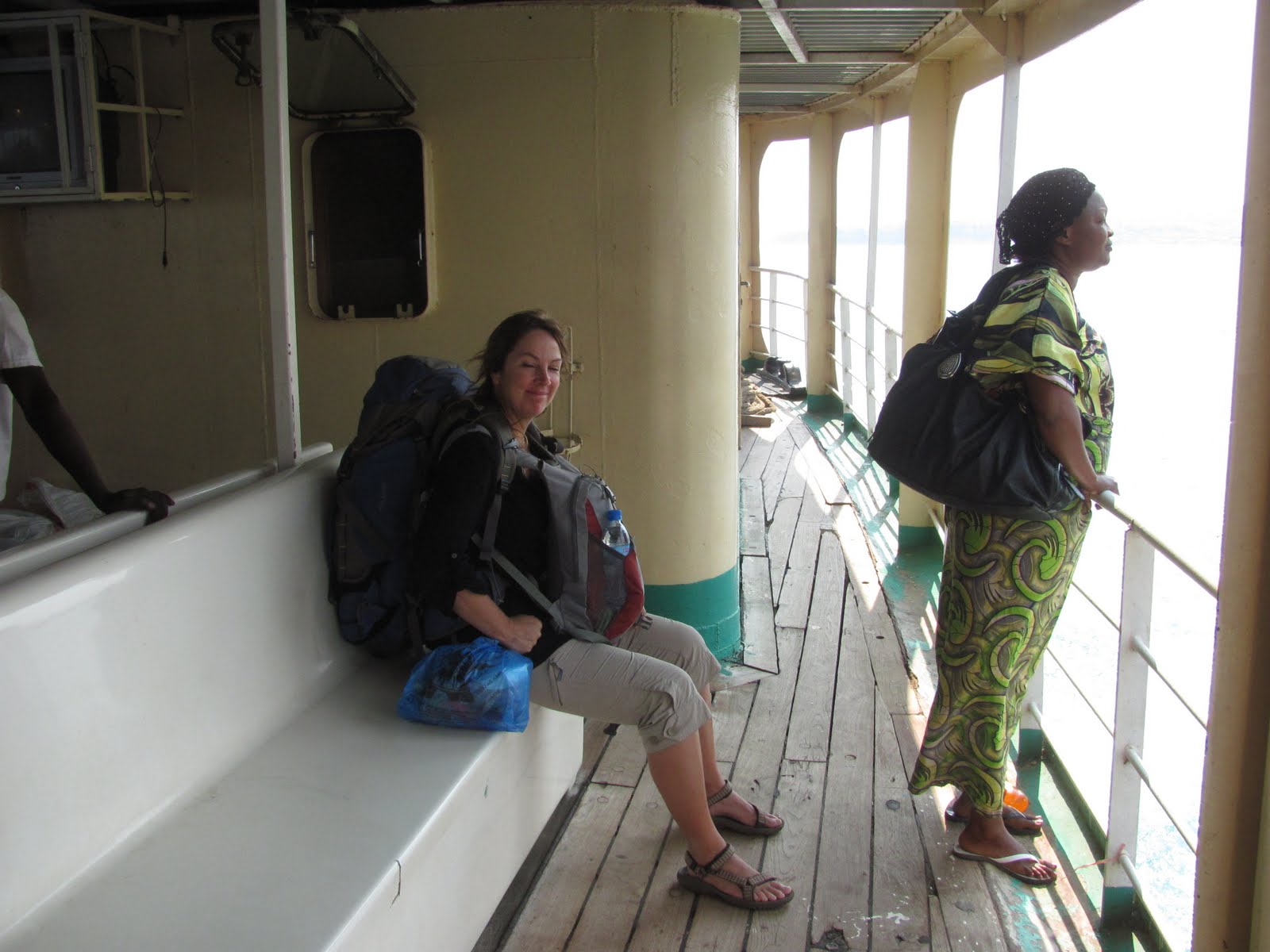
We disembarked from the MV Liemba in Mpungalungu and passed through Zambian immigration with ease. They even accepted a photocopy we had printed out from the Zambian Consulate web site stating that as Irish citizens (yes, we're duel citizens), we would be exempt from paying $100 for a visa. They couldn’t have been more welcoming. They brought us into an office and gave us seats in front of a computer and stamped our passports. A half finished solitaire game glowed on the screen prompting me to wonder if the entire world plays solitaire. Everyone was so friendly! They all but offered us a Guinness. But when all the immigration formalities were completed and we were almost at the port gates we were abruptly stopped by the Zambian equivalent of Homeland Security. “Security Check!” a burly Zambian shouted and pointed us towards an open door where a well dressed young woman and three policemen were examining a deck of nudie playing cards that they had just confiscated from another passenger off the ferry. “Put your bags on the table! Where are your medicines? What’s in here?” demanded a policeman while prodding the compartments on our day pack. “Where do you keep your medicines?” He asked again.

I handed him the zip lock bag that holds our malaria tablets, antibiotics, allergy medicine, Pepto Bismol, and aspirin.

One of the policemen zeroed in on my allergy medicine. “This is Benadryl,a controlled substance in Zambia! Who do these belong to? Where is your prescription?” he asked sternly.

“They are mine,” I answered keeping my eye on two others who continued to paw through our bags. “I don’t need a prescription. I bought it over the counter in California. They are for my allergies.”

“Well, now you are in Zambia and here you need a prescription. This is a serious matter,” he said in a tone a TV cop would use when he was about to arrest a drug dealing gang member.

I wanted to say, "Well, that's just silly!" but I took my time before responding. You never know which way things will go with a cranky border official and I really just wanted to get out of there. I looked from him to the eight allergy pills in his hand. I could argue the issue, demand to see his superior and possibly walk away with my allergy medicine, but that would take far too long and we had a bus to catch. “Well, I’ve been carrying those eight pills for four months and haven’t had to take one yet,” I said with a smile trying to come up with just the right thing to say so he would let us go on our way. “I guess one option is that I hand them over to you. Or, I guess we could destroy them. That would be another option.”

“No”, he said even more brusquely. “The only “option” is that I open a docket and arrest you for drug trafficking”, he finished while reaching for a sheet of paper.

What? Was this some kind of joke? Some weird Larium dream? I looked over at Scott in disbelief. His eyes said, “be careful what you say.”

You could have heard a pen drop as the policeman recorded all my passport details and confiscated my passports. “I am sending for the chief of drug enforcement”, he said. “Come with me.”

We waited in stunned silence in the small office of the Zambian DEA chief. Did he want us to offer him a bribe? Should we? Or would that just get me in more trouble? I was becoming more anxious by the minute. I felt the situation could go south if I said or did the wrong thing.

Fifteen agonizing minutes went by before the chief entered the office. He sat down behind his desk and said that I was in “a serious bind.” He fingered the eight Benadryl and studied my travel documents. He asked how long we were going to be in Zambia and where we were going to stay. He made some notes and looked through every page of my U.S. and Irish passports. He put the Benadryl packet aside, put his hands together and repeated what the policeman had said, “This is a serious offense,” and since I was evidently being arrested in slow motion, he inserted a hugely pregnant pause before leaning forward and adding, “but,” he paused again, “when someone is trafficking in drugs, they usually have more than eight pills in their possession.” He said nothing else for a full minute. Maybe that was when we were supposed to offer the bribe, I don’t know. I do know that I was holding my breath. I was beginning to feel a little dizzy when he finally he concluded, “I think perhaps your intent was not to sell these.”

I took a breath. “That’s right. My intent was to take them for my allergies. See?” I said pointing to the label. “It says, ‘Benadryl Allergy’.” I thought of our African Trails pals Alice and Tom and how they had nearly been arrested a month earlier in a bar at 3am in Ethiopia and thought it might have been better if I were intoxicated like they were when they were taken in for questioning. Tom's defense was, “We are but humble travelers” though “humble” came out “hummel” I'm sure. In any event, they were released without charges. One of the policemen even paid the damages for the mirror they (allegedly) broke in the disco.

Zambian policemen are apparently not so flexible. The drug enforcement chief picked up the sheet of paper with my Zambian Permanent Record to date, pushed back from his desk and relaxed comfortably in his chair. “We will take possession of these illegal drugs and keep a record that you brought them into the country without the necessary paperwork - in case there is any more trouble,” he finished ominously.

I felt a rush of relief. A few minutes later, I was in tears. Not because he had suddenly changed his mind and decided to arrest me – he didn’t. But after he dropped the charges, he started to act like all was forgiven, like he wanted us to friend him on facebook. He continued to keep us in his office and ask questions. He asked what the weather was like were we live, had we been to Zambia before, were we planning on doing any safaris while there We had already been detained over an hour and I wanted to get out of there before he decided something else in our bags, like my bikini top, or Scott’s Leatherman tool, was somehow contraband material. It was probably due to the small amount of sleep I had over the two previous nights on the Lake Tanganyika ferry not to mention the considerable stress of nearly being thrown into a Zambian jail, but tears suddenly began to roll down my checks uncontrollably.

Looking at me in complete bewilderment the chief asked, “Why are you becoming so emotional?”

I stood up and blubbered, “I’m very tired. We were on a ferry for three days and now we have an uncomfortable 15-hour bus ride to Lusaka to look forward to, which we have probably already missed. And gee, I guess being threatened with arrest makes me cry.” I wanted to say more but didn’t want to press my luck. I gave one last look at the allergy medicine on his desk, shot him a look of disgust, picked up my backpack and stormed out the door. He didn’t try to stop me.

I walked through the port gates and started up the road to the bus station muttering, “…corrupt official…. asshole…. I wonder how much he will sell my Benadryl for …” Scott caught up and gave me a hug. “That was pretty scary!” I said, blowing my nose and hugging him back.

After we had been walking about five minutes we saw a man standing on the side of the road next to a white sedan with an open trunk. It was the DEA chief. “Your bags look too heavy. Please allow me to give you a lift to the bus station.”

“No thank you!” I said without breaking my stride. I could tell he felt horrible but I thought maybe, just maybe, he’d be a little more understanding or at least not so excruciatingly unhurried, when arresting (or not arresting!) the next unsuspecting Benadryl carrying traveler. Though to be safe, if you are ever detained at a border or crack a mirror in a disco overseas, try the “We are but humble travelers” defense. It just might work.

We did manage to catch the last bus to Lusaka that day (one that took 18, not 15 hours though), and arrived at Lusaka at 7am the next day in time to have breakfast with Candice, the woman in charge of our bridge project.

A week later in Petauke, we had the opportunity to buy beers for a couple of Peace Corps volunteers, a tradition for us whenever we encounter them overseas. (We are celebrating our tenth year!) When I told them that my Benadryl had been confiscated at the border and that I had been threatened with arrest they said, “Oh yeah, we’ve heard of that happening. The Peace Corps gives us a document to show border or police check officials stating that we have permission to carry Benadryl. It has come in handy because there are lots of random police checks in Zambia.”
Scott looked over at me and said, “Wow, these guys really have a thing for Benadryl! Remind me to deep six that Benadryl mosquito after-bite pen we have.”


Kamunjoma, Zambia
Next: The Dancing Bridge

Time Travel on the Lake Tanganyika Ferry


It seemed like a good plan. Take a 12-hour bus ride from Nairobi in Kenya to Dar es Salaam in Tanzania, and then ride a train for three days to Kigoma on the shore of Lake Tanganyika where we would catch the twice-monthly ferry to Zambia.
The first part of the plan worked like a charm. The bus ride was long (15 hours instead of 12), bumpy, and dusty but we arrived in Dar in one piece - always something to celebrate when traveling by public transport in the developing world. The next morning found us at the train station to book a sleeper only to find that the train would not be running any time soon due to a very specific reason, “many problems.” We had to be in Kigoma by the 27th to catch the ferry so we were suddenly scrambling to find another way to get there on time. Days and days on buses on horrible roads driven by sleep deprived men intent on passing on blind curves at unsafe speeds would be our least favorite option. Luckily, Air Tanzania, the only airline flying to Kigoma, had two seats left on the only flight with availability that week. We had a few days to kill in Dar but that was fine by us because Dar es Salaam is one of our favorite African cities. Even though it’s big, it manages to retain a friendly vibe. We even felt comfortable walking around at night.


The best part about Dar (besides Sunday Brunch at the Movenpick Hotel) was that we ran into Jo and Will whom we last saw two years ago in Cape Town. Scott was on his way to the Angola embassy to inquire about visas in case we had time to travel there before our trip ended. For whatever reason he decided to stop in at the City Supermarket shopping center on the way.

Walking through the arcade he heard, “Scott!” It was Jo, the awesome, bubbly, enthusiastic photographer who ran the photo safari we did two years ago and Will the driver was with her. “What a small world!” we said later to Will after hugs all around. (Weeks later in the garden of a small hotel in Petauke, Zambia we would meet and share a few beers with a Peace Corps volunteer who had taught my nephew Colin at Mitty High School in San Jose. “What a small world!” we all said. I love it when we connect with friends –Anne Marie, Alex, Maria, Conner…– at the oddest times in the oddest places- and it happens more often than I ever thought it would.)


The flight to Kigoma was wonderful. We had seats 1 and 2 on a 20-seat propeller plane - and a small plane is the only way to fly in Africa. You can make out people in the bomas below and sometimes, even spot animals. And, just like in the good old days, some kids on board got to meet the captain and co pilot in the cockpit during flight. We landed on a gravel runway and waited for our luggage in a baggage claim area that consisted of one bench and a plywood shelf. One by one, baggage was placed on the shelf while an airline worker called out the person’s name on the baggage claim.

After collecting our backpacks we walked outside to find a taxi so we could get to the ferry office in time to pay for our cabin and find a place to stay for the night. But, for the first time ever in all our travels, there were no taxis and no touts clamoring for our business. We contemplated walking to town when a well-dressed man, the manager of the Lake Tanganyika Lodge, walked up to us and asked if we needed help. Sam was picking up an American couple on tour and, after we explained that we needed to get to the ferry office as soon as possible, made us an offer we couldn’t refuse. “Allow me to drive you to my hotel via the ferry office. If you like my hotel, please stay. If not, you will have a free ride into town.” He nodded towards the couple waiting in the hotel van. “On the way, we will stop at the place where Stanley met Livingston on the shore of Lake Tanganyika.” That was fine by us!


The spot where Stanley first encountered Livingston is marked with a plaque under a mango tree, though the lake has receded considerably from the spot where first they made contact. Global warming, I presume? There is also a small museum with photos and drawings depicting Livingston’s life in Africa. We sat in the shade under the mango tree while a young man told us the story of Livingston; how he came to Africa to explore, fight slavery, bring Christianity, how he died in Africa and how it took his two faithful servants over a year to carry his body back to England.


It was an interesting lecture but it was being told almost in real time, and we were very anxious to get to town to secure our cabin on the ferry. Since the ferry operates only twice a month we either had to secure passage on the ferry leaving the next day or we would be forced to face four grueling days on trucks and bush taxis to get where we needed to be in Zambia.
Scott stood up and with a big smile said, “Livingston, what a guy!” putting a period on the lecture and heading to the mini van.


When we arrived at the ferry office, we were told that they had given away our cabin. After much discussion, they decided to put us in the family cabin, which is the only cabin on board with it’s own toilet, so that was fine by us! Then Sam said that if we stayed at his hotel he would not only grant us a late check out, he would transport us back to the ferry the next afternoon in time for the scheduled 3pm departure. He drove us to his hotel, which was just a short distance from where the MV Liemba was docked and the Lake Tanganyika Lodge hotel was beautiful so that was fine by us. We changed into swimsuits, ordered beers, and dove into the sparkling clean pool fronting the lake. The American couple, it turned out, was on their first trip to Africa and on their honeymoon. We toasted both their decisions and watched the sun go down over the lake together.


The MV Liemba is the world’s oldest continuously operating passenger ferry ship in the world and, Lake Tanganyika, bordered by Tanzania, The Congo, Burundi, and Zambia, is the longest lake in the world. Those two facts alone were enough to make us want to make the 3-day, 2-night trip south to the shores of Zambia. But the Liemba has an interesting and complicated history making it all the more enticing. It was built in Germany in 1912 and, in parts, was brought to Africa to be used as a cargo ship. During WWII it was enlisted into service as a German military expedition ship against the Belgians in the Congo, and the British in Northern Rhodesia (Zambia). The Belgians sunk it. Later the Germans raised it, took it to Kigoma and, after greasing the engine, deliberately sunk it again. (The story of the MV Liemba was the inspiration for the movie The African Queen where Humphrey Bogart and Katherine Hepburn sink the German cargo ship.) After the war, the British raised it and began using it as a cargo and passenger ferry, and that is still what it is being used for today. The captain, crew, and many of the passengers appreciate the age of the ship and treat her with the respect she deserves.


But, really, a hundred-year-old ship? It couldn’t have been that great. It was! In 1970, the Danes provided a grant to refurbish it, the engine was changed from coal to diesel and the rotted out berths and benches were replaced. But the best part of being on the Lake Tanganyika ferry was the feeling of traveling back in time.


All along the shores of Lake Tanganyika are villages so remote there isn’t a single road leading to them. Just as it was hundreds of years ago, the lake is their lifeline to the outside world. We discovered this firsthand at 10 pm the first night when incredible shouting coupled with a slowing of the engine woke us. Outside our cabin we looked into the darkness to see ten leaky wooden boats powered by Yamaha outboards and a few dug out canoes (powered by oar) jam-packed with humanity and cargo all clamoring to get on board at once. At the same time from third class two decks below, an equivalent number of people and cargo were trying to get off the ferry and onto the little boats. Bananas, pineapples, sacks of cotton and rice, and mattresses, a lot of mattresses, were being thrown either up onto the ferry cargo deck or down into the wooden boats. Those who carried only a suitcase or sack frantically climbed up the sides of the ferry to our deck and made their way quickly downstairs before the crew could catch them. That sight and the fact that there was so much screaming had me worried at first that we were being hijacked (boat jacked?). You know how much I like pirates but this was a little unsettling. “Holy Crap!” I said to Scott as we watched organized chaos in action. It was like that for about half an hour. Then the wooden boats and dug out canoes laden with new passengers and cargo headed for shore and all was instantly quiet on the ship. Mothers on the cargo deck went back to breast-feeding their babies, passengers who had cabins retired to their bunks and everyone else (most of the 500 on board) found a little space between pineapples and bananas and 5-gallon jerry cans of palm oil on deck to sleep.


This same scenario was repeated every two or four hours over the three-day passage whenever we neared a village. If we were asleep, we got up to watch the spectacle. If it was during the day we walked around the top deck taking photos. It gave new meaning to the term ‘on board entertainment’. Most of the shouting came from the wooden transport boats as they approached the ferry at ramming speed. They get paid not only per passenger but also per piece of cargo so they raced to get alongside the ferry to be first because he who gets there first and shouts the loudest gets the most. We watched quite a tug of war between two boatmen over 3 plastic chairs. Unbelievably, bobbing amongst the transport boats were women in smaller boats calmly selling fish and fried bread to passengers on the ferry, even in the middle of the night. We didn’t get much sleep those two nights on the Liemba due to all the commotion but it was a window into the past. The people who live along Lake Tanganyika rely on the twice monthly visits of the cargo ferry ship for food and for transport just the way they have for a hundred years.


There were a handful of other western travelers on board most, as we were, in first class cabins. The beer was cold and the food in the dining lounge was good. Yes, there were cockroaches and probably a rat or two but there was plenty of interesting conversation. If you are meeting a westerner for the first time on the Lake Tanganyika ferry chances are they are well traveled and have a story to tell and our fellow passengers did not disappoint. A Dutch doctor had just finished his internship at a clinic in a small village in Tanzania. He was visibly shaken by what he had seen in the village, especially the deaths and suffering and amputations that could have avoided with proper medical care. He said the most upsetting thing was that people waited too long to see a doctor, choosing first to use the witch doctor or use herbs that often made things worse. What most upset him was watching the labor of girls too physically young to even be having children suffer horribly because of herbs they had taken to make the baby come faster. He could barely talk about his experience. He even had to leave the village a little earlier than planned, “I just had to get out of there”, he said emphatically.

Then there was the uber enthusiastic German geography teacher who had to pay a $50 fine for taking photos of the harbor in Kigoma and told us the story of the time he was nearly arrested for the photos he took in Cuba. But his students are sure learning a lot! An English couple in Africa for a year, and a well-traveled French-Chinese couple rounded out the table nicely. They all got off in Tanzania, one stop before we did to see the second highest waterfall in Africa, a four-hour hike in and out. We wished we could have fit it in to our itinerary. “Next time”, Scott said. We watched them disembark and leave the dock on the only transport around. In the back of a huge lumbering lorry they were packed like sardines with, again, pineapples, bananas, and mattresses but also bicycles and sacks and sacks of something. Suddenly we were the only two mzungus (white foreigners) left on the ferry, which is why my next update is titled, Avoiding Arrest on Drug Trafficking Charges at the Zambian Border.


Petauke, Zambia

Sunday, June 20, 2010

Pizza Hut and Pyramids, and The Ferry to Sudan


Even though it is THE thing to see in Egypt, we were reluctant to visit the Pyramids in Giza. We had been there in 1981 when they sat alone in the middle of a desert but now we heard there were apartment complexes practically in the shadow of the Pyramids. Sadly it’s true. We caved to pressure from the others and went to Giza. We were able to eat calzones while watching the sound and light show from the rooftop terrace of a Pizza Hut directly across from the Sphinx.


Cairo was hot and dusty. The air was so foul we could barely see the sun. We spent our days strolling through the narrow alleys of the souk, touring the fine museum, eating falafel balls, and blowing our noses.


In hot and dusty Luxor we approached Karnak Temple by horse drawn carriage and aimed for pins in a 2-lane bowling alley fronting the Nile.

In the first game I was paired with Natalie, an Australian nurse, who had a mean spinner technique and could take out most of the pins on each throw. I managed a few spares myself. When we scored the most points, I broke into my happy dance and re-injured the Achilles tendon that had given me so much trouble during the hike in Spain. When will I learn? Excessive celebration spanks me every time.


Aswan, in contrast to Luxor, was dusty and hot. But 2 nights on a felucca helped dull the heat some, at least while we were under sail. Yes, the Nubian Museum and The Valley of the Kings were incredible, but The Last McDonalds Until South Africa was voted best attraction. We even tried to get the felucca captain to pull over for one last McFlurry just after we set sail in Aswan.


It’s a necessary evil, but the ferry ride to Sudan, like a Commandment, shalt never be forgotten. Scott and I negotiated the bustling port by charging through the hoards of people and parcels, trying to look like we commuted to Sudan from Egypt weekly. “Keep forward momentum! Don’t stop. Don’t look back!” Scott prodded. We boarded at 10 am and finally set sail at 6pm that night. Humanity, boxes, sacks, or suitcases took up every square inch of deck space. Most of the large boxes contained brand new electric fans and that was my first clue that any moving air in Sudan would have to come from a man made source.


Our ticket required that we sleep on the deck but during the day we could pass the time in an air-conditioned bench seating area below deck along with 550 others. Scott stayed on deck while I joined in on a card game with locals below. One man hated losing and, thinking it was the inept card playing skills of the person before him that caused him to lose, rearranged our seating order several times. I don’t speak any Arabic and they didn’t speak English so whenever anyone wanted to change the suit we had to point to a spade, heart, club, or diamond on torn out page of a novel where we had drawn pictures of the suits. My new companions liked playing cards, but they loved to laugh. They offered me homemade honey with pita bread and I offered them Egyptian Pringles.


After losing three straight games in a row I went back on deck to find that the crew wanted to do a lifeboat drill and had moved our group from where they sat under the only shade on deck, which was of course, the lifeboat. The drill took forever and brains were starting to boil so Scott, our African Trails driver, and a few others just cranked the boat back up on their own initiative and everyone re-hunkered down in the shade. In the direct sun it was absolutely intolerable to be on deck. Scott and I consumed copious amounts of water during the day but rarely had to use the stanky, humid, flooded bathrooms on board. Who knew dehydration would have its advantages?


Around sunset there was a call to prayer at the very same time I was making my way across the deck. About 40 men suddenly stood shoulder-to-shoulder, faced east and prayed. Periodically they knelt and brought their heads to the deck in unison. There was barely space to move. I was just beginning to wonder where the women were praying when people behind me began pushing to get through. But I couldn’t move forward or back. I felt trapped. Finally, during a kneeling phase a man quickly stepped around me and made his way between those praying. After some hesitation I decided to follow him. Only I was too late. Suddenly the kneeling part was over and they were all standing again. I froze between two men. Horrified, I stood there with big eyes, not breathing and trying to look invisible. It would be as if I was in mid-genuflect (is genuflect still in the Catholic dictionary?) and someone came and stood right in front of me blocking my connection to the altar. I panicked and tried to pass but the man to my right, without making eye contact, calmly raised his hand ever so slightly as in “wait” so I did. I stood as still as a pillar and was suddenly part of an Islamic prayer cluster.

I tried to find him later to apologize. I thought I might be able to spot him since he would surely be the man giving me dagger eyes. But none of the men cared. They were as nice as could be to me. I’m sure they would have preferred that they could pray without distraction - who wouldn’t? But their attitude was more, “We’re all on this crowed boat together doing the best we can. Now let’s get back to playing some cards!” Religious obligation over, it was time to get back to the fun stuff. Like when I was a kid. After mass we would get to go home and watch some football.

Still, standing amidst a small sea of Islamic worshipers while they pray is just not kosher so I decided I would be less culturally annoying to everyone if I just stayed below decks. I went back down to the A/C to try my hand again at a card game called something that sounded like, “Whoa”.


At 9 pm the temperature outside was still above 40 degrees Celsius. I was in no hurry to brush my teeth and go to bed so I continued playing cards with a Nigerian woman and two Sudanese men. Eventually blankets came out, the cards were put away, and people began to stretch out on the seats so I had no choice but to move up to the deck. I looked at the space Scott and I had reserved under the lifeboat but there were too many bodies and only room for half a Scott to sleep comfortably. Hot and sticky, we surveyed the deck looking for any available space to get horizontal. Eureka! We gathered our therma-rests, tiptoed over slumbering Egyptians and Sudanese, and climbed up to the small near-empty roof of the pilothouse.
A few others joined us on the roof including an Arab man who periodically sat up to pour water over his head before lying down on the backpack that he was using as a pillow – mine- but mostly it felt like it was just the stars in the sky, Scott, and me. It was a beautiful and surreal night. At 4 am, over scratchy speakers, a call to prayer so loud that I’m sure could be heard back in Aswan prompted most of the men on deck to again rise, clear a space, face Mecca, and pray. Sunset prayer was one thing but, 4 am?? Once again I was struck by the power of faith and how devoted people can be to their religion. I had seen it on the Camino in Spain, on top Mt. Sinai, and now on the ferry. I’m just in awe faith.


Just after sunrise we squeezed in underneath the lifeboat, hung our legs over the side of the deck, and took photos of the shore and Abu Simbel, the gigantic temple complex that was relocated a slight distance up the bank when the Nile was dammed to form Lake Nasser.


Several times during the voyage we were summoned to fill out paperwork. We had just returned to the shade of the lifeboat after completing a form that certified us as aliens (“I always knew you were from another planet” never gets old, does it?) when we were told to report to the clinic on board for an H1-N1 clearance. We traipsed upstairs to a small, untidy cabin with a bunk bed and a desk covered with yesterday’s or last week's plates of food and cups of tea. It didn’t smell very nice. One man sat on the disheveled bottom bunk smoking a hookah pipe while another took our temperature. He inserted a thermometer into the ear nearest him, took a reading, recorded it on yet another form, wiped the end of the thermometer on a manky-looking cloth, said, “Next,” and probed another ear. The thermometer must have been broken because all of our temperatures were far below normal - but since we were starting to feel that way, it somehow made sense.


The last 3 hours of the journey we were stuck in the mud. This coincided with an Biblical plague of small green bugs that swarmed in from the shore. After 31 hours we finally arrived in Sudan, a country like no other. Okay, it’s hot and dusty like Luxor, and dusty and hot like Asswan, but the people are, honest to God, the friendliest we have ever known. Sincerely nice. The lady who seemed to be trying to insert her brand new boxed fan up my backside as she pushed and shoved to get off the ferry couldn’t have been from Sudan.
Once we were on Sudanese soil we were no longer hassled like we were in Egypt: “Hello my friend, ride camel? Come to my shop? Try my perfume? See my papyrus? Why don’t you want to be my friend…?” Instead, people just smiled and said, “Welcome! How do you find Sudan?”


Scott and Tris

Wadi Halfa, Sudan


Next: Swimming The Nile in a Muu-Muu


Thursday, April 15, 2010

A Boat, Boots, Bedouins, and A Bridge - On the Camino de Santiago

A Boat:

On March 16th, 2010, I was busy loading my backpack (one pair boots, 2 pair socks, 2 pair hiking pants, 2 t-shirts, rain gear and, last but not least, ear plugs) for a 6-week trek in Spain when Scott said, “What if we travel to Spain by sea instead of by air?” By the 17th I was trying to fit cruise attire into my backpack. By the 20th, Brazilians (we boarded in Sao Paolo) were handing Scott their cameras and asking him to take their photo.
We didn’t manage to fit much cruise wear into our packs after all, so I think they mistook him for crew. (This has happened to us before). Scott played along, cheerfully arranging everyone and putting them in the best light. “Smile! Say queso!” he said, which wasn’t even right since the Portuguese don’t say, “cheese” before taking a photo. If they did it would sound more like “kejzo” anyway. But queso or kejzo, it didn’t matter. Both end in an “O", so a few Brazilians who mistook Scott for crew have photos of themselves looking like they've just been goosed.

We occupied our days at sea by finding creative ways to make hiking gear passable on “formal” nights (impossible), and by reading, playing trivia, and talking to nice people, especially those from Holland and America. Most afternoons found Scott in the library, where he learned to play Bridge from a patient teacher who just happened to be the doppelganger for my wonderful brother Mike. That was nice...

Boots:

My hiking boots disintegrated on the flight over from San Jose. I don’t know how or why. At first I took it as a sign from God. After all, what idiot would commence a 500-mile trek without training for it? Yours truly and her one true love, that’s who! Our training consisted of walking around the ship - four times around the deck was a whole mile.
After one such rotation I noticed that my boot was baring its sole all over the promenade deck - insulation was flying everywhere. Soon, the entire boot bottom was flopping around after me like a spatula stuck to my foot. I needed appropriate shoes for the hike in Spain, but our favorite outdoor store, REI, was an ocean away. But I was in luck! The island of Tenerife, off the coast of Africa, is a duty-free shoppers paradise  that specializes in electronics. They also sell footwear such as Nike, Puma and Solomon.

At the first shoe store, the saleswoman said with disbelief, “Size 9 and a half! Are you kidding me?” Then, she announced it over the P.A. system. The other customers in the store pointed at me and stared, waiting to see what would happen next. I know they were thinking, ‘Big foot! It’s not a myth!’

The shop clerk gave me a look of pity as I left, shoeless: How ever did you get this nice man to marry you with feet the size of tennis rackets? her eyes said.

After several more false starts and sniggers by wide-eyed shoppers and clerks, I was able to find a pair of Solomon hiking boots that fit perfectly. So what if I had to buy them in the men’s department? They have served me perfectly well so far.

We began the hike in Pamplona, home of the running of the bulls and occasional hangout for the late Ernest Hemingway. In Pamplona you can find signs such as, ‘Hemingway slept here’, ‘Hemingway wrote here’, ‘Hemingway drank here’, and random shops simply called 'The Hemingway'. We didn’t stay at the Hotel Hemingway near the bullring because it was 200 euros per night, but as we stood in the lobby soaking up the aura of the notorious adventurer, a hotel guest noted our hiking apparel and said, “You must be Peregrinos. You should stay at the Refugio!” He walked us there, pointing out the places where Hemingway had a cigar and took a lover.

For more than 900 years Peregrino has been the term for anyone hiking The Camino de Santiago.  Refugios, or Albergues, were where they slept.
In Pamplona, for 6 euros each, we were assigned a bunk in a 100-bed dormitory that was housed in an ancient monastery. We were numbers 92 and 93 to sign in.
Most refugios on the Camino have at least 30 beds in one room. “Sounds smelly!” you might be thinking, and you would be right. Hundreds of years ago, a monk or priest would walk through the Refugio swinging a smoking incense ball to dull the odiferous funk of the pilgrims as they slept. Modern day Refugios have hot showers, laundry machines, Internet, and kitchens. Still, that first night in Pamplona, I thought a few passes with an incense ball wouldn’t hurt. Two hundred sweaty boots smell like a wet cow. No worse than that - like a wet cow with bad breath that snores with its mouth open.


It’s not that bad. I brought lots of earplugs with me, the refugios are spotless, and a slight smear of Vicks under the nose works wonders. If it weren’t for all the Germans who get up at 5 a.m. to use up all the hot water and race to the next Refugio for the best bunk (the German half of me really wants to do that too), the refugio experience would be great.
So far, all the refugios are co-ed. Even the dorms and the bathrooms aren’t divided by sex. It’s like living in a house with a hundred brothers and sisters from all over the world. We’ve met Estonisan, Dutch, German, Irish, English, Canadian, and lots of Spanish peregrinos. On rare occasions we get a double room to ourselves, and that is muy bien. So far, we haven’t met any other Americans but we probably will meet one or two over the next 40+ days of the hike.

One is supposed to be on a spiritual or cultural quest to hike The Camino. If we see it as a spiritual quest, and make it to Santiago, where the bones of St. James rest in peace, we will be awarded an indulgence. An actual indulgence! That means if I complete the Way of St. James, as the Camino is called, I will earn an indulgence and all my sins will be instantaneously wiped clean. Poof! Permanent record erased. Then, if I were to get hit by a car or something before I have a chance to sin again, I would go straight to Heaven. The chances that I wouldn't sin again shortly after leaving the compostela office by, say, taking the Lord's name in vain,"Gosh darn! That is one beautiful Cathedral!" (only it wouldn't be "gosh"), or coveting chocolate or beer or woman's boots is pretty remote. The "express to Heaven" reward was more significant before the Pope did away with purgatory anyway. But still, I will be walking a little lighter after I gain the indulgence, at least for a few moments.
Strange to say if you know me, but I do feel spiritual while walking the Camino. At least that's how I interpret the vibe. I feel just so darn happy all the time. I have long thought nature is my religion and I feel closest to my Maker when I am out in it.
Scott says his intention is a cultural quest, which I don’t mind one bit, because he has been giving me history lessons everyday. Whether it be details about an old Roman road we are walking on, or tidbits regarding Spanish or Portuguese explorers, it is always interesting and takes my mind off my aches and pains.

“Keep an open mind,” I suggested. “After 6 weeks on the trail, you might find it has somehow become a spiritual quest.” To which he replied wincing, “Very likely since my feet might die and go to heaven before I get there.”
I hope that doesn’t happen. But this is only day 4 of our hike, and he is already walking like Amos McCoy. I resemble Grandma Moses - in mens boots. I don't think I needed to clarify that. I think Grandma Moses always wore mens boots, didn't she?

Every day, we trod up and down hills, through vineyards, olive groves, and newly planted wheat fields so green the wheat looks like a jade river swirling down hills and around the vineyards. We walk from village to village, over narrow, or muddy, or rocky footpaths just the way pilgrims did 900 years ago - except we are powered more by café con leche and chocolate croissants, than by gruel. The villages are so charming, and the churches along the way so magnificent, that they distract us from thinking about our sore feet or backs, or calves, or thighs, or knees, or shoulders-- at least for a little while. We walk about 12-15 miles per day, which takes us 6 to 8 hours depending on the terrain. But our packs are way too heavy because we have stuff in them that we don’t need in Spain, but which we do need for Africa, which leads me to Bedouins.

Bedouins:

Mid-May will find us in Cairo, where we will join an overland truck for a ten week journey up the Nile that will take us through Egypt, Sudan, Ethiopia and Kenya.

In August, we will transit to Zambia to help build a bridge.

Bridge: A footbridge, that is, in Zambia. We will work with a non-profit called Bridges to Prosperity. Learn more about how we became connected with this organization at: www.firstgiving.com/teresaokane

We’ll be gone Five months, Bridge (San Francisco) to bridge.

We love hearing from you!
Hasta Luego! Scott and Tris

Torres del Rio, where Hemingway, as far as I know, didn’t sleep.
The Way of St James,
Spain

Haiku (sort of) for the day:
Behind the hay
I peed
The hills were green